Why Women?
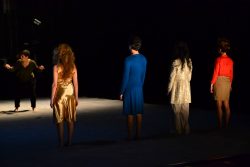
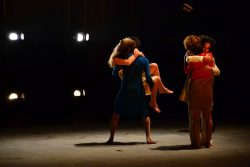
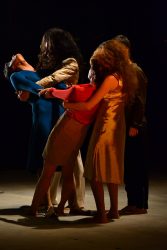
So, the biggest question: Why were they all dressed as females? The answer, according to Rajeh, is simple. "They don't represent women as women; for me they represent the whole cultural society we live in—including men, women, and children. They are humans."
Sensuality
"If we put them as men on stage we lose a certain sensuality in the performance; it will give a different energy to the work."
Disordered World
Much of Rajeh's inspiration came from reading Amin Maalouf's Disordered World, which deals with intellectual and climate crisis. "We're living today in a world of crisis; I don't mean to be pessimistic but if we don't change things, it will start to develop badly."
Not Just About The War
"The piece is not a documentation about the war," explained Rajeh, "we're not trying to reflect the war." Instead That Part of Heaven serves as an almost painful reminder that we are ignoring what we find unpleasant in favor of a shallow "mask."
The Inspiration
Rajeh originally got the idea behind That Part of Heaven when he was at a wedding. Seeing women in full makeup and dresses, he made the association that this "mask" was exactly how we were seeing the Civil War—behind the cover of forced pleasantries.
Unresolved Conflict
"We didn't resolve our conflict or have a public resolution—we just continued living." remarked Rajeh, "We don't want to hear about the Civil War and what happened." "Thus, the dance is about the aftermath as much as it is about our everyday lives."
To the Audience
Rajeh invites audience members to delve into their own perspectives and question their every day life. "This gives them [the audience] the initiation to question and not just ignore things."
That Part of Heaven
Rajeh expressed his happiness with the dancers and performance as a whole, enthusing "I think they've done an amazing job."
See the Performance Live
Want to experience the performance for yourself? Click here for more details. You've got till January 26 to join in, so what are you waiting for?
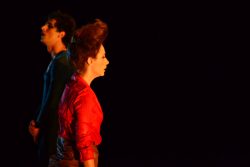
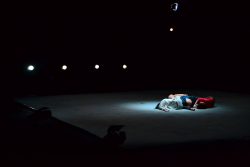
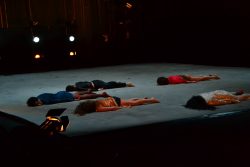
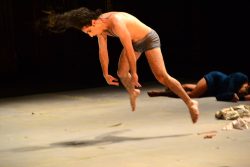
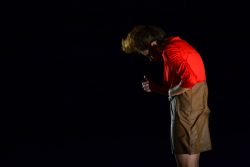
Now showing at Al Madina Theater, That Part of Heaven is a solemn depiction of the aftermath of the Lebanese Civil War in dance form.
A moving piece choreographed by Omar Rajeh and Mia Habis, the performance is meant to be our present day perspective of the Civil War—in that our refusal to acknowledge its impact is slowly warping our everyday lives. Beirut.com interviewed Rajeh for a deeper look into what the performance meant, why the dancers were all dressed as women, and what audience members were expected to take away from the show.

Comments