Creative Beirut: A Cultural Exploration of Lebanon in Edinburgh
This week, Lebanon took center stage in Scotland during a four-day, global ethnography showcase called Creative Beirut. The event was organized by Arek Dakessian as part of his ongoing research into the arts and culture scene in Beirut, of which he’s also an active member. Through presentations and panel discussions, Creative Beirut explored how artists and media producers respond to and negotiate dominant narratives in and of the city.
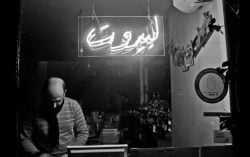
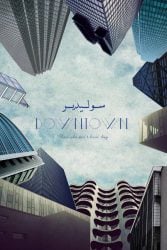
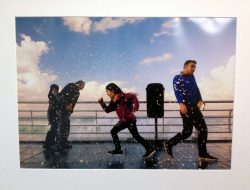
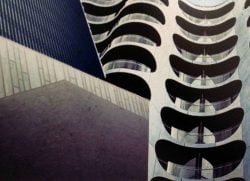
The event introduced the University of Edinburgh audience to Beirut I Love You and Shankaboot, and featured an exhibition of photos by the Beirut Street Photography community, as well as posters by Dima Tannir and Tres Colacion. The event also included an academic discussion based on research by Caitlin Robinson into cosmetic beauty practices in Lebanon. Robinson’s research explores how the dominant post-war reconstruction narrative that emphasized rebuilding Beirut through consumption may be linked to these new cosmetic beauty ideals, and how beauty feeds into an emerging economy of cosmetic tourism.
(A segment from Shankaboot on cosmetic surgery, screened during the event)
In his opening remarks, Dakessian described how Beirut is caught between two dominant, global media representations: Beirut, the city of bombs and instability, and Beirut, the city of nightlife and fun. Yet, alongside these mainstream tropes, there are many other representations coming out of the city. “What are these networks of cultural production up to?” he asked. Are these creative networks responding to sociopolitical conditions around them? Or as, Dakessian put it, “is culture disciplining politics?”
Cultural products like Shankaboot seem to have this aim. Bass Breche, the scriptwriter of the award-winning webseries, took part in the discussions, and described his work as an attempt to make “socially responsible” drama. Breche was motivated to write the series because “there are not enough stories about our society,” particularly stories of what’s generally seen as “small issues,” like drugs or sexism.
By way of example, Breche explained how the “Merci Madame Najem” video he produced was a response to racist policies at Lebanese beaches and swimming resorts. Its script was based on things he’d actually heard women in Lebanon say. Breche packed these statements into one shocking ‘interview’ intentionally designed to “go viral” and “provoke” Lebanese people. Though he did not intend to represent the ‘typical Lebanese woman,’ Breche highlighted the pervasiveness of racist attitudes in Lebanon by saying: “we probably have a ‘Madame Najem’ in our own home.”
The work of the Beirut Street Photography community provided another perspective on the event’s central theme. Loryne Atoui, the BSP’s founder, explained that many of the street photographers in the community are motivated by a desire to capture other sides of Beirut. “We are sick of the images we see,” she explained. Furthermore, street photography “is an outlet” and a means “to rediscover [our] city,” “find beauty in the ordinary” and “reignite [our] love for the city.”
Hence, while Shankaboot responds to the dominant images of Beirut by forcing drama to face the tough issues of our society, the BSP community does this by providing a space for its members to explore and ask their own questions.
Such work, whether academic or artistic, always comes with a huge, ethical responsibility. As one audience member put it, the politics of representation is always, at heart, a struggle over “taking a snapshot of a complex environment.”