
This Lebanese Academic Predicted Bluetooth Headphones 77 Years Early
If you’re a literature nerd, you know that authors like Ray Bradbury, the American writer who wrote Fahrenheit 451, predicted major technological advancements years before they were invented. But what if we told you this Lebanese academic predicted them even before that novel was published?
Ray Bradbury’s Fahrenheit 451 remains one of the most relevant pieces of literature to this day. The novel, published in 1953, is set in a dystopian society where books are outlawed and firemen burn books they find in anyone’s possession. Bradbury actually predicted things like wireless earbuds and flat screen TVs, but apparently, AUB archives reveal that Lebanese academic Charles Malik predicted bluetooth headphones many years before that.
AUB’s student-led newspaper, Outlook, shared an essay from 1927 in a now-defunct newspaper called the Student Union Gazette. Malik wrote, “A stage might be reached where the apparatus becomes so small that it could be slipped into our ears and there made to directly transmit the received disturbance.”
For context, Bluetooth headphones wouldn’t hit the market until the early 2000s.
Who is Charles Malik?
Charles Malik was a Lebanese philosopher, academic, and diplomat, born in 1906 in Btourram, North Lebanon. He studied mathematics and physics before turning to philosophy, earning a PhD from Harvard University under Alfred North Whitehead.
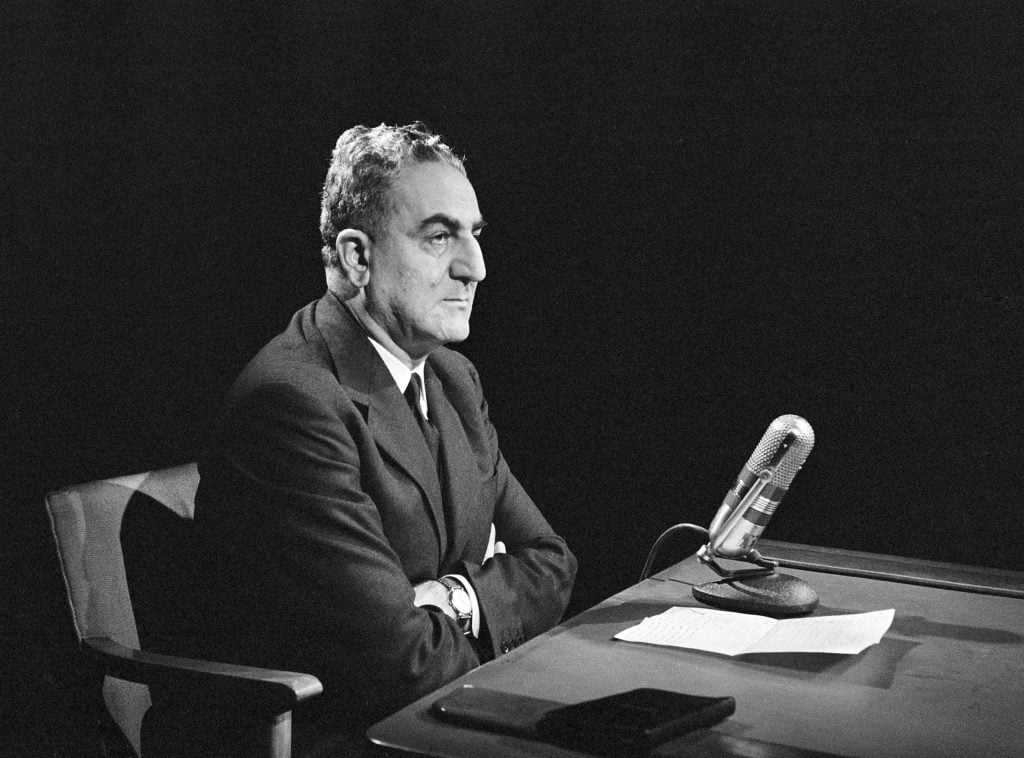
Malik later taught philosophy at the American University of Beirut and became one of Lebanon’s most influential international figures. He played a central role in drafting the Universal Declaration of Human Rights at the United Nations in 1948. He worked closely with Eleanor Roosevelt and other key delegates.
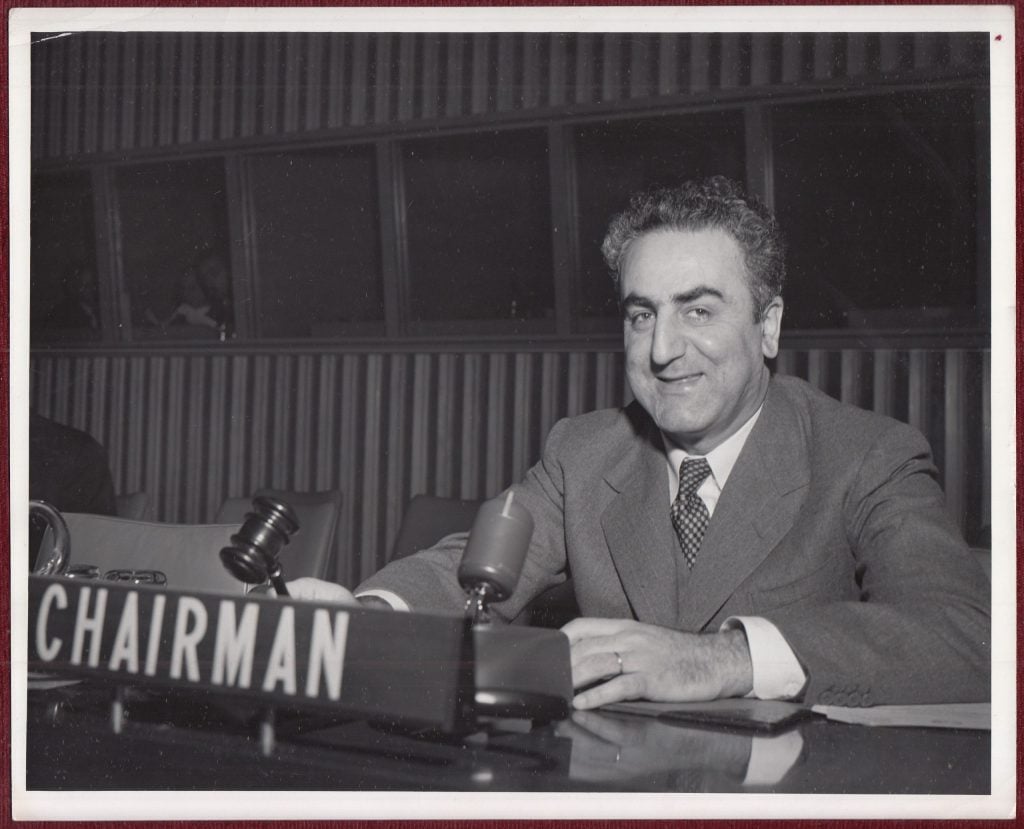
Malik served as Lebanon’s ambassador to the UN, later becoming President of the United Nations General Assembly in 1958. Throughout his career, he wrote extensively on philosophy, ethics, freedom, and human dignity.
Did you enjoy this read? Make sure to check out the #DidYouKnow? section for more content like this.