Check Out Yazan Halwani’s Newest Creation In Beirut
This article was originally published on our Arabic platform by Rana Karout and was translated to English.
On the sidewalk opposite to the medical entrance of USJ and on the same side of the French Embassy, lies a small semi-circular courtyard that sprouted a new and eccentric tree between the old trees and buildings.
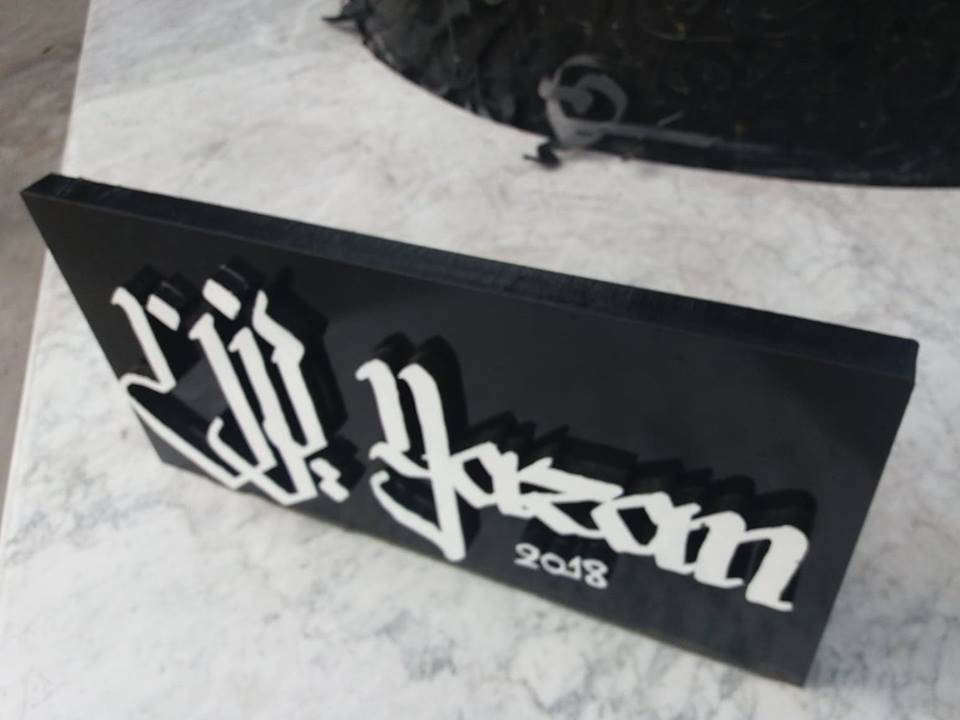
“Tree of Memory” is what they call it, and you’ll immediately be able to spot it from the distinctive black metal of the trunk and the rose-gold leaves.
The plate says the following:
بعاني اللبناني من فقدان جماعي للذاكرة، صعب عبيروت تتذكر ماضيها العنيف وعشان هيك بتضل بتعيدو وتعيدو من خلال حرب بعد حرب.
Translation: Lebanese people suffer from collective loss of memory. It’s difficult for Beirut to remember its violent past, and that’s why the city repeats and repeats it through war, after war.
Yazan Halwani, graffiti artist, is behind this expressive piece of work. If you’re not familiar with the name, his other pieces of work are very well-known around the city, such as Sabah’s mural on Hamra street. Halwani not only evokes awe on the visual level, but he conveys important messages and themes through his works of art.
With this tree, the place turned into a symbolic cemetery to honor the victims of the great famine that occurred between 1915 and 1918. More than half the population migrated or died, and before the “Tree of Memory” we had nothing in the city that told us their stories, experiences, and woes of the war.
After a hundred years, the trees on Damascus road in Sodeco will remain as the only living witnesses of the torments of the people that were killed by their starvation.
The “Tree of Memory” also holds some of the most famous of sayings of that era, including words by Gebran Khalil Gibran, Tawfik Yousef Awad, and Abara Salam Al Khalidi.

1