Blog
The History of Deir El Salib, the Hospital the Pope Visited Today
Just above Jal El Dib sits Deir El Salib, a cornerstone of mental health care in Lebanon for more than a century.
It started in 1919 when Blessed Father Jacques (born Khalil Haddad), a Capuchin priest known for his charity, founded a small refuge for the elderly, the sick, and those cast aside by their families. By the late 1930s, it had evolved into an asylum, offering protection and shelter to people who had nowhere else to go.
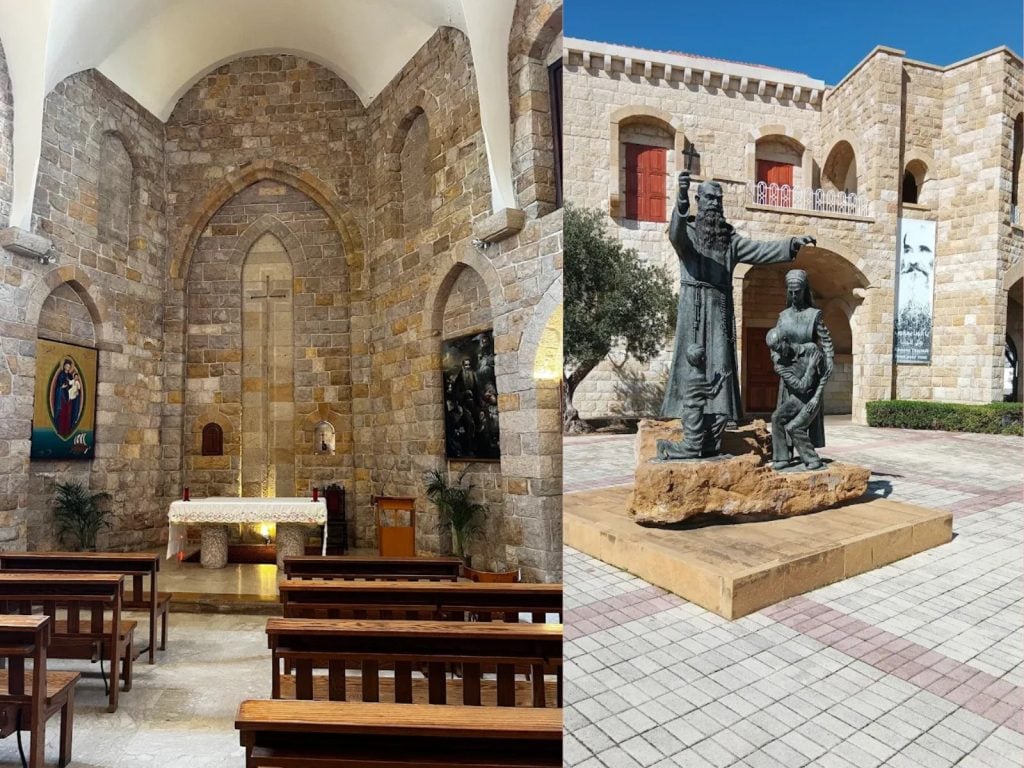
Images retrieved from Moussa Mansour (left) and Elie Samia (right) via Google Images.
The shift to a psychiatric hospital
The real transition came in the early 1950s, when the monastery evolved into a full psychiatric hospital. As older institutions downsized or shut down, Deir El Salib absorbed long-stay patients from across the country and gradually became one of Lebanon’s primary custodial psychiatric facilities. The Franciscan Sisters of the Cross took over its administration, a role they still hold today.
For decades, the hospital functioned as a national safety net for people with severe or chronic mental health conditions, many of whom had nowhere else to go.
By the early 2000s, Deir El Salib was one of the largest psychiatric institutions in the region, housing hundreds of patients and maintaining long-term wards, rehabilitation units, and nursing services. In the 2010s, the hospital reported a capacity of approximately 1,000 beds.
Lebanon’s cascading crises dramatically changed the picture
The 2019 economic collapse, currency devaluation, medicine shortages, and mass emigration of healthcare workers hit these kinds of institutions especially hard. Deir El Salib’s operating costs soared while state subsidies remained symbolic. Staff spoke publicly about struggling to buy medication, maintain equipment, or cover basic needs for the nearly 800 patients living there, many of them long-term and entirely dependent on the hospital.
The hospital, despite its size and legacy, operates under immense pressure. Yet its importance has only grown. With mental health needs rising across the country and community-based services still limited, Deir El Salib continues to care for people who would otherwise be abandoned.
Why these institutions matter
Deir El Salib matters today because it exposes both the possibilities and failures of mental health care in Lebanon. It embodies a long humanitarian tradition, but it also reflects the urgent need for modern, sustainable psychiatric infrastructure.
Preserving it is not just about honoring its past. It’s about acknowledging the thousands of people who still rely on it, and building a mental health system where long-term institutionalization becomes a choice, not the only option left.
The Worst 3aj2as in Lebanon, Ranked
20 Jul 2026

49 Sunset Spots You'll Love around Lebanon
02 Jul 2025