
Blog
Lebanese Engineering Graduates Built a Robot for Search and Rescue Missions
Every minute counts when rescuers are searching for survivors trapped under rubble. Three recent graduates from the Lebanese University’s Faculty of Engineering II in Roumieh have developed an AI-based search and rescue robot designed to help teams locate survivors faster while keeping rescuers out of harm’s way.
Elie Farhat, Sarah Farhat, and Georges Mnayarji presented the robot as their final-year engineering project, under the supervision of Engineer Elias Al Zaghrini and with sponsorship from Spinneys.
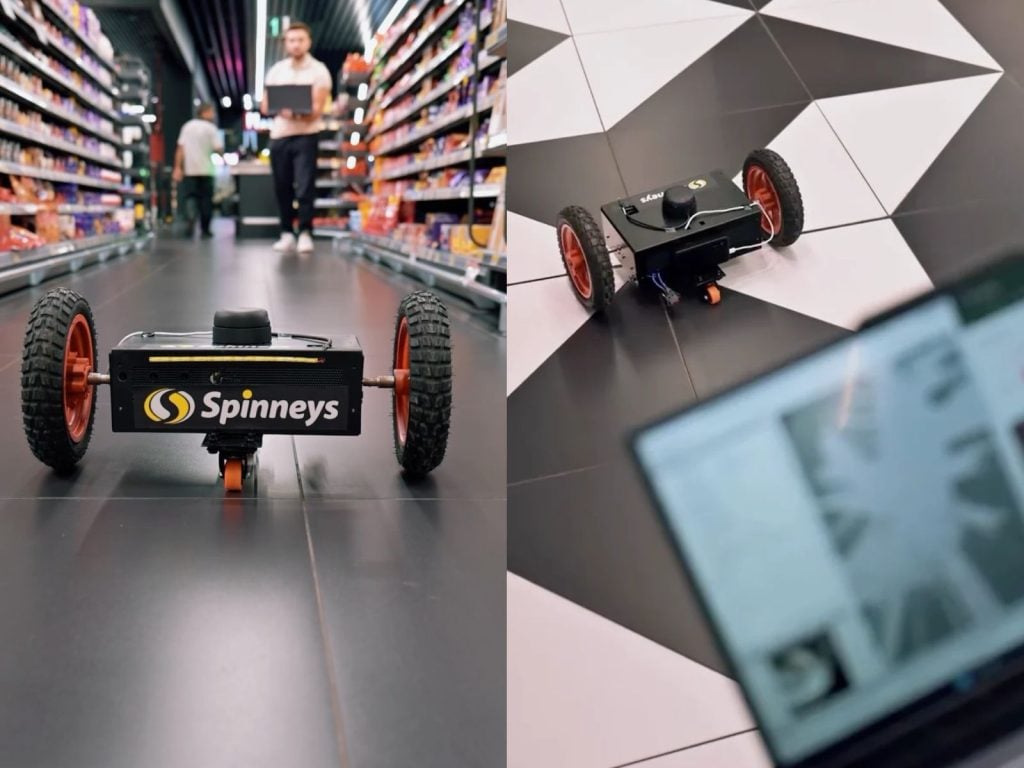
The team designed it to enter unstable structures ahead of rescue workers. It searches for signs of life, maps the surrounding area, and establishes voice communication with people trapped inside.
The idea came from wanting to put their engineering skills to use for a cause that hits close to home. Throughout the five years they spent studying, the graduates witnessed Lebanon endure devastating circumstances. When it came time to choose their final-year project, they wanted to build something meaningful that could make a difference amid so much loss.
They wanted to build a tool that helps teams find trapped survivors before time runs out.
How does the search and rescue robot work?
The robot combines several technologies to help rescue teams assess dangerous areas without immediately sending people inside. These include AI-powered vision, thermal imaging, gas sensing, and LiDAR mapping.
Together, these features are designed to help the robot identify potential signs of life, detect environmental hazards, and create a map of the area. It can also open a voice line to people trapped beneath the rubble, allowing rescue teams to communicate with them and better understand where help is needed.
By relaying this information to rescuers, the robot aims to help teams prioritize their efforts, save valuable time, and reduce their exposure to unstable structures and other hazards. The students also consulted the Lebanese Red Cross Urban Search and Rescue (USAR) team during development, and their input helped shape the robot’s features and define its limitations, grounding the project in the realities of search and rescue work.
A project with Lebanon in mind
Having witnessed the destruction and loss Lebanon has experienced over the past five years, they wanted their final project to serve a practical purpose. Their conversations with rescue teams helped them understand what rescuers need in the field and how technology could support their work. They used that feedback to guide their design decisions.
The team hopes the robot will one day support rescue operations in Lebanon, where earthquakes, explosions, bombings, and structural collapses can leave people trapped in dangerous conditions.
The project is a reminder of why young engineers deserve more support and opportunities to put their ideas into practice. With the right resources and guidance, graduates like Elie, Sarah, and Georges can take what they develop at university beyond the classroom and work toward addressing real needs in Lebanon.
For more content like this, check out the #Lebanese Proud section on our website.





Looking for something to do? I can guide you.
Or start with one of these