
Guides
14 Beloved Spots That Define Hamra
Hamra will always hold a special place in our hearts. The neighborhood is deeply intertwined with the city’s history, once an intellectual and revolutionary hub that brought together writers, artists, students, and thinkers from across Lebanon and beyond.
Its streets have witnessed decades of cultural shifts, political movements, and everyday moments that have shaped Beirut into the city we know today. And while Hamra has changed considerably over the years, it still holds onto a character that makes it unlike anywhere else in the country.
Here are 14 spots we believe make Hamra what it is. Some have been around for decades, others have become neighborhood fixtures in their own right, but all have a place in the Hamra we know and love.
1. Mezyan
Mezyan has been part of Hamra’s social and cultural scene since 2011, when it first opened at Estral Center before moving to its current home in the Rasamny Building. Over the years, it has built a following among artists, musicians, students, and longtime Hamra regulars, becoming a place where people come as much to meet and talk as they do to eat.
s Lebanese mezze, music, and lively evenings keep the neighborhood’s café culture alive, giving it a contemporary identity of its own. Though one of Hamra’s younger establishments, Mezyan has made a lasting mark on the neighborhood’s social and cultural scene.
2. Abboudi Bou Jaoude
Abboudi Bou Jaoude has dedicated decades to collecting and preserving pieces of Lebanon’s cinematic history, now an archive of original movie posters, lobby cards, photographs, and other printed memorabilia.
His collection now includes more than 20,000 original vintage posters and documents from Lebanon and the wider Middle East. His work is particularly meaningful in Hamra, a neighborhood whose cinemas and cultural venues once played a major role in Beirut’s social life.
3. Furn Abdel Aziz
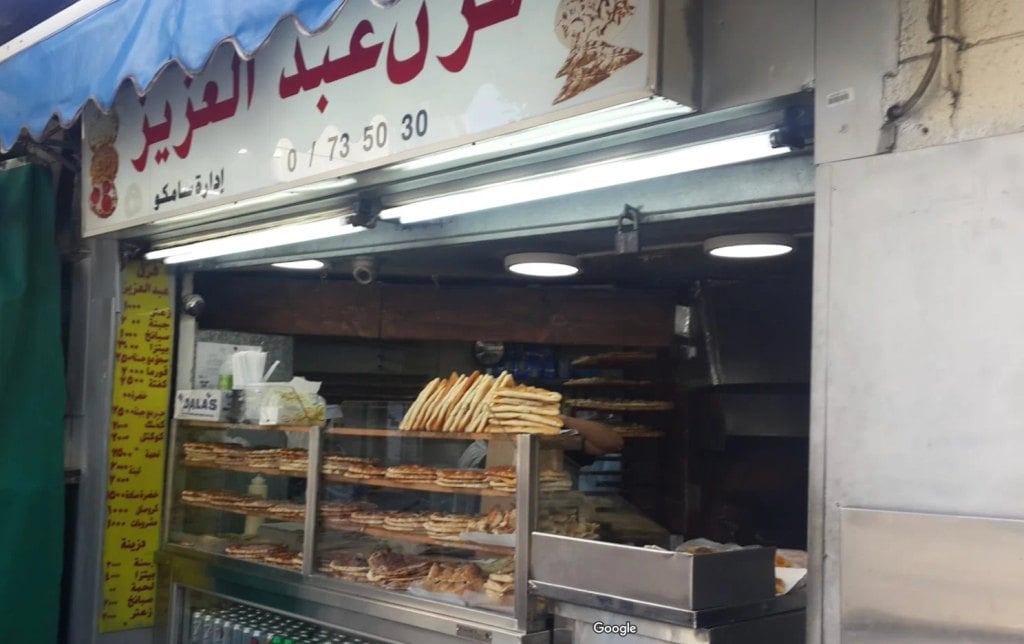
A neighborhood bakery like Furn Abdelaziz is part of what makes Hamra feel lived-in rather than simply somewhere people visit. It serves the everyday crowd looking for a fresh manoushe, a quick breakfast, or something to grab on the way to work or university. Its importance lies in that familiar, uncomplicated role in the neighborhood’s daily routine.
We’re not really sure when it opened, but it’s been around for so long that we can’t imagine a day in Hamra without it.
4. Le Colisée
Le Colisée is one of Hamra’s most important cultural landmarks. Built in 1945, the cinema once welcomed generations of moviegoers and hosted Lebanese, Arab, Indian, French, and international films.
It spent decades closed before the Tiro Association for Arts restored it and reopened the venue in September 2025 as the Lebanese National Theatre in Beirut. Its return is a reminder of how much the neighborhood’s cultural spaces matter, and why preserving them is worth the effort.
5. Café Younes
Café Younes is practically part of Hamra’s identity. The family business dates back to 1935, when Amin Younes Sr. opened a coffee roastery in Downtown Beirut, before bringing the business to Hamra around 1960. It has remained a familiar stop for generations of students, academics, journalists, and coffee lovers.
Its continued presence also makes it one of the few surviving reminders of the neighborhood’s old independent café culture, and their stunning Hamra branch is undeniably one of people’s go-tos.
6. DEEP MUSIC
An iconic cassette shop tucked across from Café Younes, DEEP MUSIC is a little time capsule of Lebanon’s musical history. Its walls are lined with hundreds of old tapes featuring some of the region’s most beloved singers and composers, from Fairuz and Sabah to Ziad Rahbani and Marcel Khalife.
More than a place to pick up an old favorite, the shop serves as a small archive of Lebanese music, preserving recordings and memories from an era when owning an album meant something a little different. It has also attracted a younger generation of music lovers curious to explore the sounds they grew up hearing at home.
7. T-Marbouta
T-Marbouta opened in 2006 with the idea of bringing coffee, books, and people together under one roof. Its opening coincided with the war in 2006, however, and the café quickly became a relief center where volunteers organized aid and distributed food and supplies to displaced families.
It eventually grew into a popular restaurant and cultural meeting point, hosting discussions, screenings, and community gatherings. Few places capture Hamra’s intellectual and community-minded spirit quite like it, and T-Marbouta continues to uphold those values through its commitment to humanitarian causes, solidarity, and community support.
8. Universal Snack
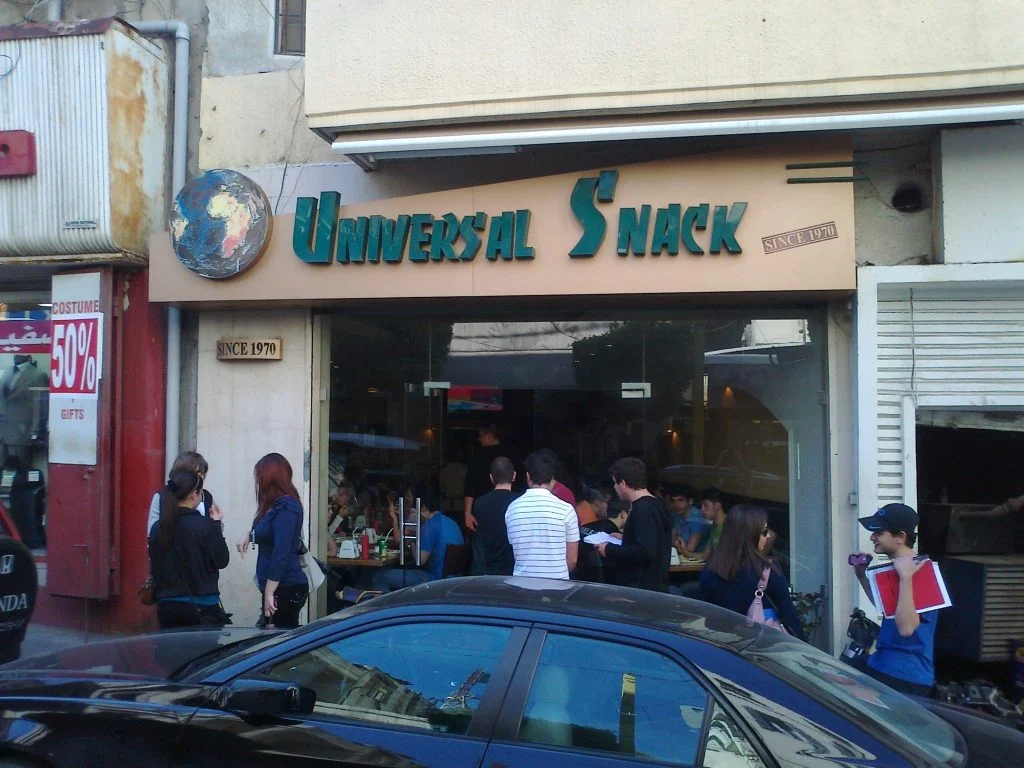
Universal Snack has been feeding Hamra’s university crowd since 1970. Founded by Jamil Abou Salma, the family-run restaurant became a favorite among AUB students looking for affordable, filling meals, particularly its burgers and chicken escalope. Its old-school diner atmosphere and familiar menu have remained part of its appeal, with generations of students returning to a place their parents and even grandparents might remember.
We hope it remains a Beirut staple for many years to come.
9. Al Madina Theater
Founded by Lebanese actress and director Nidal Al Achkar in 1994, Al Madina Theatre has become one of Beirut’s most important independent performing arts venues.
It moved to Hamra in 2005 and has since welcomed local and international performers, hosted exhibitions and workshops, and provided a platform for conversations about Lebanese and Arab society. Its presence helps keep Hamra connected to the artistic and intellectual life that made the neighborhood famous in the first place.
10. Barbar
What started as a small manoushe bakery facing the Piccadilly Theatre in 1979 has grown into one of Lebanon’s most recognizable food businesses. Founded by Mohammad Ghaziri during the Civil War, Barbar gradually expanded its menu to include shawarma, falafel, sandwiches, juices, and much more.
Its Hamra location has remained a familiar stop for students, night owls, theatergoers, and anyone craving a quick bite, at practically any hour of the day.
11. Captain’s Cabin
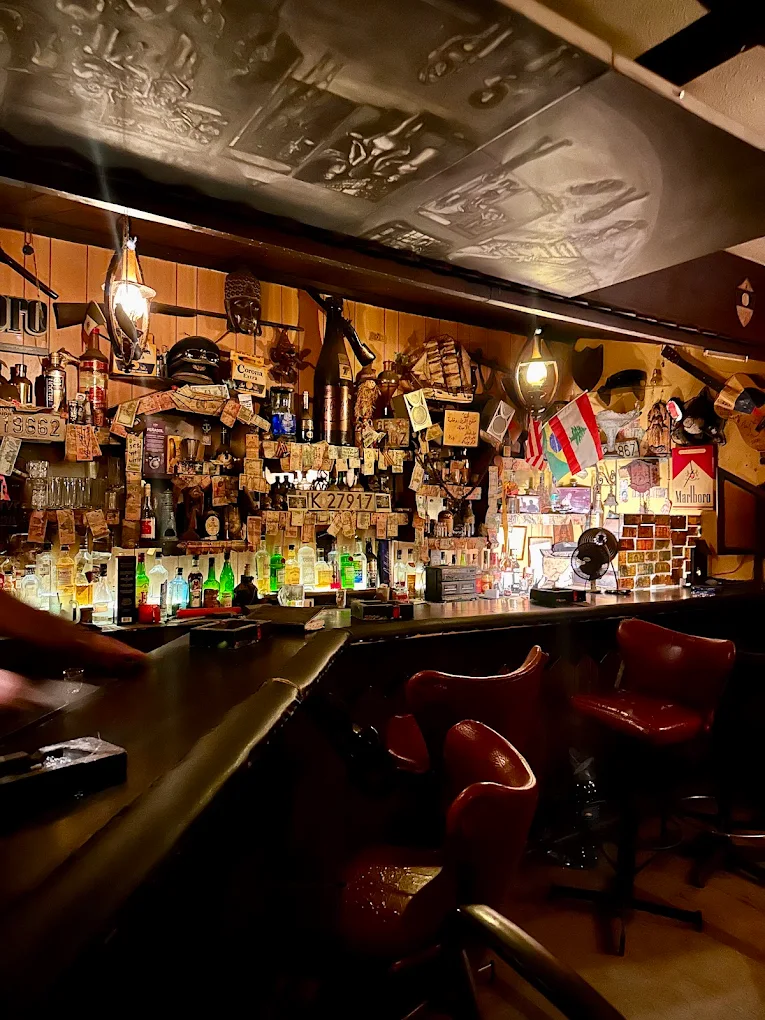
via J.R. Fernandez on Google Images.
Captain’s Cabin has been pouring drinks in Hamra since 1964, when four Middle East Airlines pilots decided to turn an old fish shop into a place where they could unwind, play cards, and have a drink.
The bar eventually became a licensed establishment in 1972 and developed a loyal following among locals, expatriates, and visitors. With its dim lighting, pool table, worn-in interiors, and old-school atmosphere, it has held onto a kind of Beirut nightlife that has become increasingly difficult to find.
12. Hamra Vintage
Hamra Vintage is a treasure trove of objects that seem to have stories of their own. Owner Ghassan Houry began collecting vintage accessories and antiques before eventually opening his shop on Makdessi Street in 1992.
Its shelves and displays have featured everything from old handbags and watches to typewriters, lamps, and other collectibles. More than three decades later, it remains a little piece of Hamra’s old-world charm, preserving objects that might otherwise have disappeared into obscurity. Although its location changed, its spirit hasn’t.
13. Book Bazar
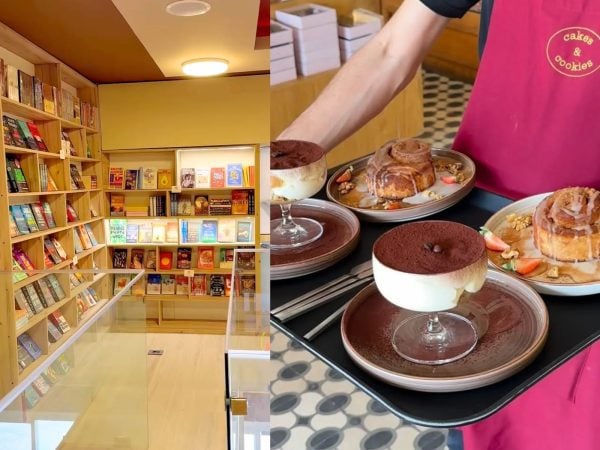
Book Bazar has been a fixture in Hamra for decades, attracting readers looking for secondhand books, old novels, comics, and unexpected literary finds. It recently reinvented itself as a book café, reopening in October 2025 with a dedicated lounge area where visitors can sit, read, and enjoy a coffee.
The transformation gives an old neighborhood favorite a new lease on life while preserving what made it special in the first place: its seemingly endless collection of books.
14. Chico Records
Chico Records has been part of Hamra’s music scene since 1964, when Khatchik Mardirian opened the shop at just 20 years old. Originally known as Pick of the Pops, it eventually became Chico Records and developed into a beloved destination for music lovers searching for vinyl, CDs, and rare Lebanese recordings.
Khatchik also co-founded the ZIDA record label with Ziad Rahbani in the 1970s, further connecting the shop to Lebanon’s musical history. Today, the family-run business continues to preserve a part of Beirut’s record-collecting culture.
Did we miss any iconic Hamra spots? Make sure to check out the #Hamra section on our website for more content like this.


Looking for something to do? I can guide you.
Or start with one of these