
Blog
After Winning Over the World’s Biggest Museums, Nabil Kanso Finally Comes Home to Beirut
The art world is finally catching up to Nabil Kanso (1940–2019).
Recent acquisitions by the Solomon R. Guggenheim Museum in New York, the High Museum of Art in Atlanta, and the Sursock Museum in Beirut, alongside renewed critical attention from The New York Times and Artforum, are bringing long-overdue recognition to one of the most important painters of the modern Arab world.
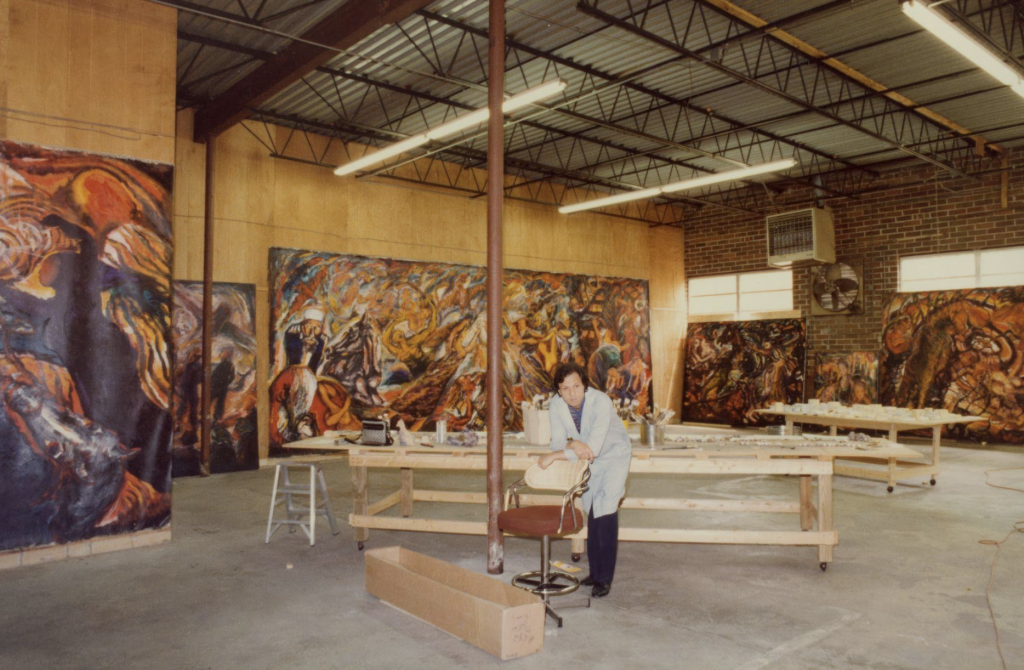
Nabil Kanso with Lebanon (1983) in his studio, Atlanta, USA. Photo courtesy of the Nabil Kanso Estate.
Writing in Artforum, critic Donald Kuspit situated Kanso alongside artists including Francisco Goya and Otto Dix, while The New York Times drew parallels between his work and the murals of Los Tres Grandes and his Leaves from the Theatre of War series with Goya’s The Disasters of War. These recent critical reassessments underscore Kanso’s growing recognition on the international stage.
On 23 July 2026, Lebanon will present the first major solo exhibition of Kanso’s work in the country of his birth. Presented by the Dalloul Artist Collective (DAC), Nabil Kanso: Darkness and Light (Part I) marks a long-awaited homecoming for an artist whose career spanned more than five decades and whose connection to Lebanon never faded.
“I think an artist cannot detach himself from the world,” he once reflected. “We are part of it, and we respond to it through art.”
About Nabil Kanso
Born in Beirut in 1940, Kanso studied in London before moving to New York in 1966, where he established the 76th Street Gallery, a gathering place for artists, writers, musicians, and critics.
At the heart of Kanso’s practice was a commitment to confronting the human consequences of war. He created paintings on the Vietnam War, the Lebanese Civil War, the Gulf War, Iraq, Syria, and other humanitarian crises. His paintings ask what remains, what history chooses to remember, and what responsibility we carry toward one another.
His practice
Across more than five decades, Kanso never altered his vision in pursuit of acceptance. Painting was, in his own words, the condition that made life possible: “I live to paint. Without painting, I cannot function.”
Remaining faithful to that vision came at a personal cost. Kanso continued creating outside the commercial spotlight, guided by his belief in “producing art in the face of war, cruelty, and indifference.” Reflecting on Kanso’s lifelong commitment, Dr. Basel Dalloul, Founder of the Dalloul Art Foundation (DAF), recalls an artist whose relationship with painting never changed.
“Nabil Kanso is an artistic giant and among the most important artists of our time. Painting for him was life. Now, more than ever, it is essential that we exhibit his work in Lebanon and across the globe. Kanso’s iconic visual language communicates a message of peace and gives us a window into the soul of humanity that must be seen.”
Saleh Barakat, founder of Saleh Barakat Gallery and a leading authority on modern and contemporary Arab art, knew Kanso personally and believes time has only strengthened the artist’s relevance. “He was speaking about these things fifty years ago. We weren’t ready to listen,” Barakat said. “It took us decades to understand what he was trying to tell us and now it’s time for the world to open its eyes to Nabil Kanso.”
Nabil Kanso Documentary (2026)
Ahead of the exhibition, viewers can also explore Kanso’s remarkable life through the official Nabil Kanso: Darkness and Light documentary. Combining rare archival footage with insights from leading figures in the Arab art world and members of Kanso’s family, the documentary was produced by DAC and offers a powerful introduction to the artist’s enduring legacy.
Watch it here.
The long-awaited homecoming
Darkness and Light (Part I) brings together paintings from The Split of Life series alongside a range of works and archival material spanning the 1970s to the 2010s. The exhibition features major paintings inspired by the Lebanese Civil War, including the cover image of Kanso’s twenty-year retrospective monograph, Lebanon (1983), Lebanon 1977: Vortices of Wrath, and Blazing Vortices: Lebanon Summer of 1982 (Sabra and Shatila).
Running concurrently as part of Darkness and Light (Part II), the DAF presents all 242 drawings from Leaves from the Theatre of War, executed between 1980 and 1992. Together, the two spaces offer the most comprehensive exhibition of Kanso’s work ever presented in Lebanon. “Seeing these paintings in Beirut is especially moving because this is where so much of their story begins. My father loved Lebanon profoundly, and witnessing the way people here connect with his work means a great deal to our family. Presenting this exhibition feels like bringing an important part of him home,” said Lilly Kanso.
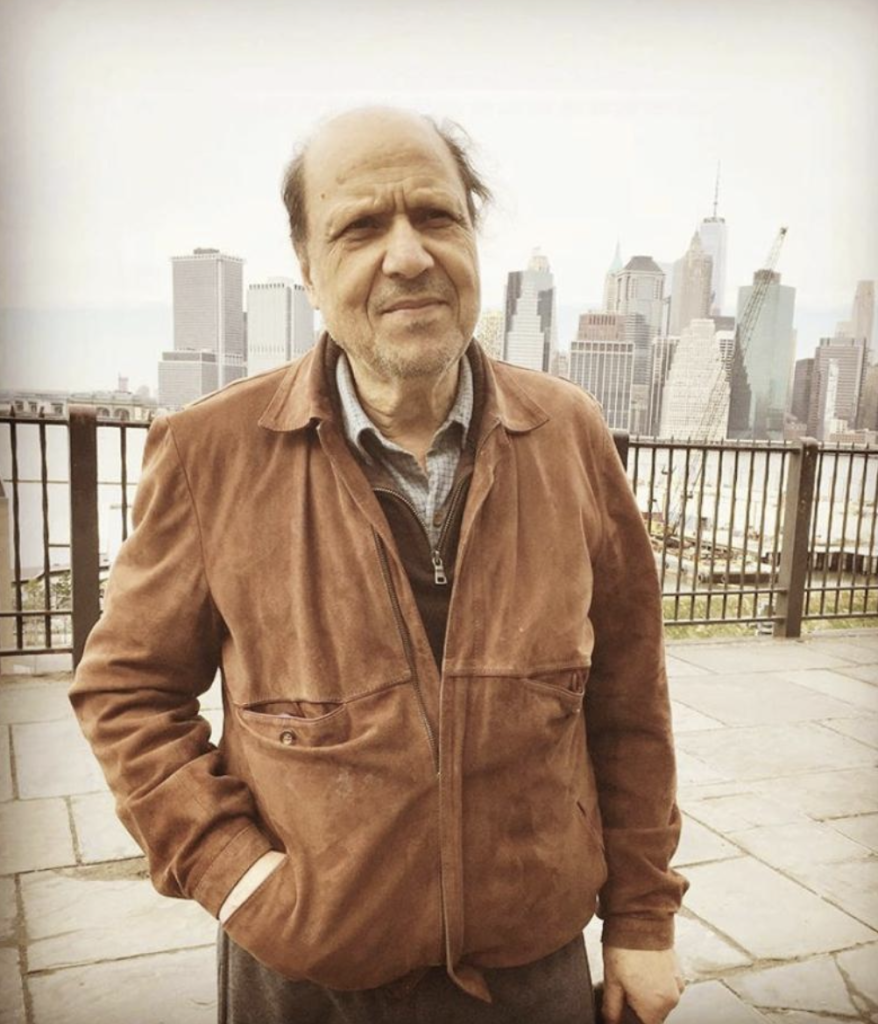
Nabil Kanso in New York City, February 2016. Photo courtesy of the Nabil Kanso Estate.
For all the devastation Kanso depicted on canvas, those who knew him insist he never painted without leaving space for hope. “There is always hope,” Kanso once said. “Somewhere in every painting.”
Opening Reception
Thursday, 23 July 2026 from 6 PM until 9 PM
Dalloul Artist Collective (DAC)
Stone Garden Building, Marfa, Beirut
Exhibition on View
24 July until 19 September 2026
Press Contact
Lina Fansa
Communications Manager
Dalloul Artist Collective (DAC)
Email: lina@dacbeirut.net
Mobile: +961 3 703 080
For more information about his work, make sure to check out the official Instagram account for Nabil Kanso. For more content like this, don’t forget to browse the #Arts & Culture section on our website.

Ardo: Beirut's New Neighborhood Bar & Kitchen
20 Sep 2026


Looking for something to do? I can guide you.
Or start with one of these